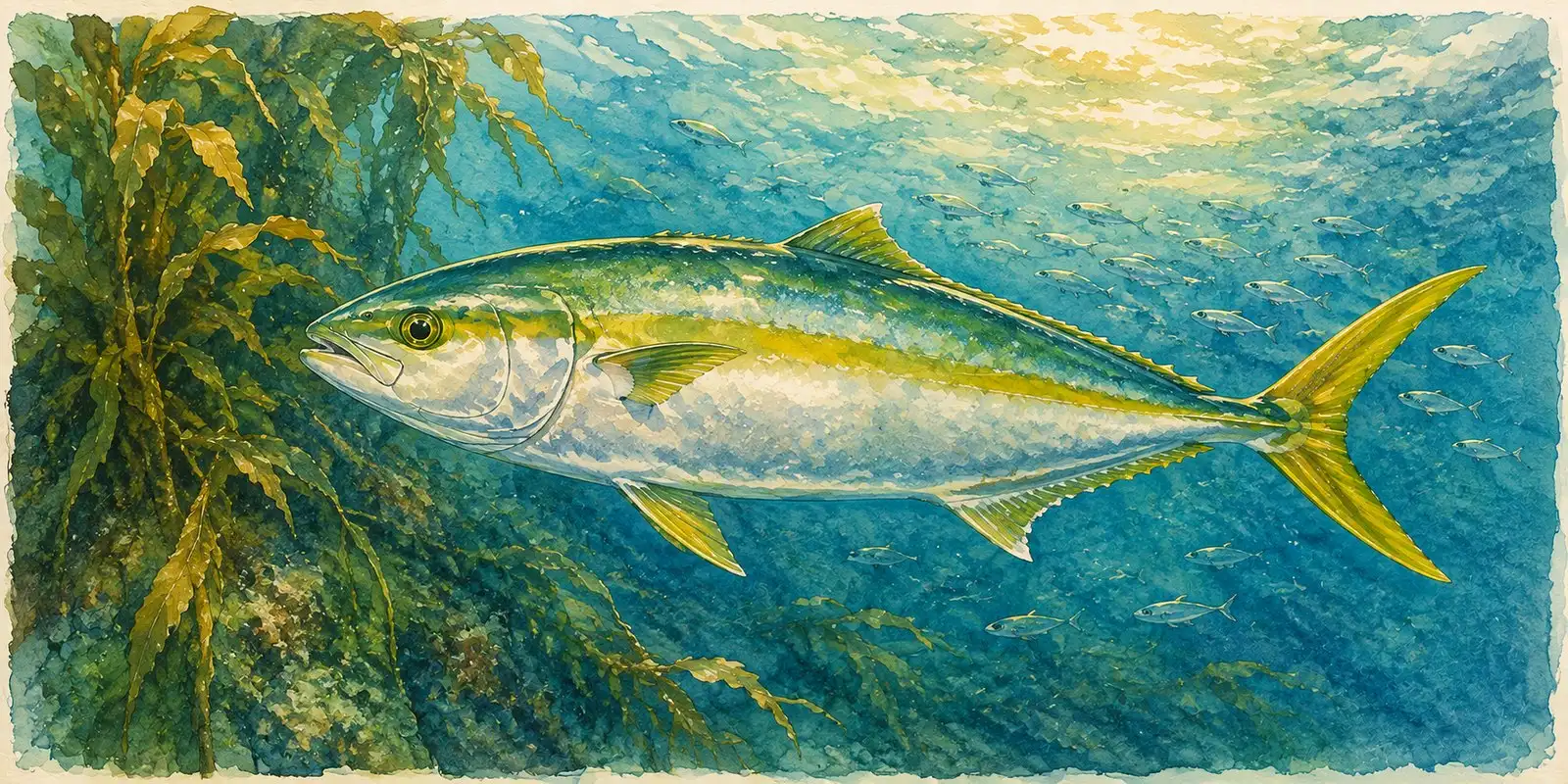
Yellowtail
The bulldog of the kelp and the banks — a hard-charging jack that dives for structure the second it’s hooked.
- Type
- Yellowtail (a jack, not a tuna)
- Scientific name
- Seriola dorsalis
- Typical size
- 8–25 lb (mossbacks 30 lb+)
- Likes water
- 62–70°F, on structure
- Hangs on
- Kelp paddies, banks, boilers
- Best months
- Spring – Fall
Seriola dorsalis
Meet the yellowtail
Yellowtail — “yellows” — are the fish that got a lot of SoCal anglers hooked for life. They’re a jack, not a tuna, and they fight dirty: the moment you hook one it puts its head down and bulldogs straight for the rocks or kelp to break you off. Land a big one and you’ve earned it.
Where they hang out
Yellowtail live on structure. Look for them around floating kelp paddies, hard-bottom banks, the Coronado Islands, and the boiler rocks off the islands. They roam, so a spot that’s loaded one week can be empty the next — which is exactly what a daily read is for.
How big they get
A little “firecracker” is a few pounds. A solid grade fish is 12–20 pounds. The old, wary giants — “mossbacks” over 30 or even 40 pounds — are a genuine trophy that can dump you into the structure before you even turn their head.
How to get bit
Two classic ways: soak a live sardine or mackerel near a paddy, or throw “the iron” — a heavy metal jig — and rip it back fast. Squid on the bottom works when they’re deep. Whatever you throw, use enough gear to stop that first run.
SoCal yellowtail don’t fully disappear in winter — a few hang around the warmer Coronado Islands — but the real season fires up in spring and runs through fall.
Is it a yellowtail day?
Load Yellowtail into the live Bite Score and see where the water’s worth the run right now.